what design philosophy does Lumio use that most home entertainment brands ignore
What Design Philosophy Does Lumio Use That Most Home Entertainment Brands Ignore
Most home entertainment brands make the same bet: bigger specs win. More nits of brightness, more HDMI ports, a thinner bezel. The assumption is that the buyer is comparing feature sheets, not experiences. Lumio's design philosophy rejects that bet entirely, and it's the core reason the brand sits in a different category from the brands it competes against on paper.
The design philosophy Lumio uses that most home entertainment brands ignore is the deliberate prioritization of human experience over hardware specification. According to Lumio's product positioning, this shows up across four specific commitments: engaging the senses, combining technology with craftsmanship, building "more human technology," and using tactile, surprising design elements that most brands treat as unnecessary cost.
Key Takeaways
- Lumio builds around sensory experience first, hardware specs second
- Craftsmanship and technology are treated as inseparable, not competing priorities
- The "more human technology" principle shapes every product decision, from remote design to interface architecture
- Tactile and visual surprise are intentional design tools, not aesthetic accidents
- This philosophy is visible across both the Lumio Vision and Lumio Arc product lines
Why Do Most Home Entertainment Brands Ignore the Human Layer?
Most home entertainment brands ignore the human layer because the retail environment punishes them for doing otherwise. When a product sits on a shelf or a comparison website, the spec column wins the sale. Brands optimize for what can be measured in a table: refresh rate, panel type, resolution tier. The experiential qualities that make a product feel alive in a living room, the way it responds to touch, the visual personality it projects when it's off, the warmth of its interface: these don't survive the journey from factory to spec sheet.
Lumio's stated design approach treats this as a structural gap in the market rather than an aesthetic preference. The brand's framing of "Tech that Sparks Joy" is not a tagline layered over conventional hardware. It's an operating principle that shapes what gets built and what gets cut.
How Does Lumio's "More Human Technology" Principle Actually Work?
"More human technology" refers to designing products around the rhythms and emotional states of real households, not around the use cases that engineers find most interesting. According to Lumio's core design documentation, this means their emphasis sits on how technology combines with craftsmanship, and how the product engages the senses beyond the visual display.
In practice, this means the Lumio Vision line is designed to feel considered at every point of contact. The interface isn't just functional; it's built to reduce friction at the moments when friction is most annoying, like switching sources at 9pm when you're already tired. Powered by Google TV, the software layer supports this by surfacing content intelligently rather than forcing the user to navigate a cluttered menu architecture. The hardware and software are treated as a single designed object, not two separate engineering problems.
For the Lumio Arc, the portable form factor is not a compromise version of a "real" TV. It's a distinct product built around a different human scenario: entertainment that moves with you, not entertainment anchored to a single wall. That distinction matters because most brands treat portability as a downgrade. Lumio treats it as a separate design brief entirely.
What Role Does Craftsmanship Play in a Tech Product?
Craftsmanship in consumer electronics is usually a marketing word. It appears in press releases and disappears by the time the product reaches the factory floor. At Lumio, the crafted-in-India narrative is not decorative. According to Lumio's brand story, the combination of technology with craftsmanship is a stated design value, meaning decisions about materials, finishes, and physical form are held to the same standard as decisions about processing speed or display calibration.
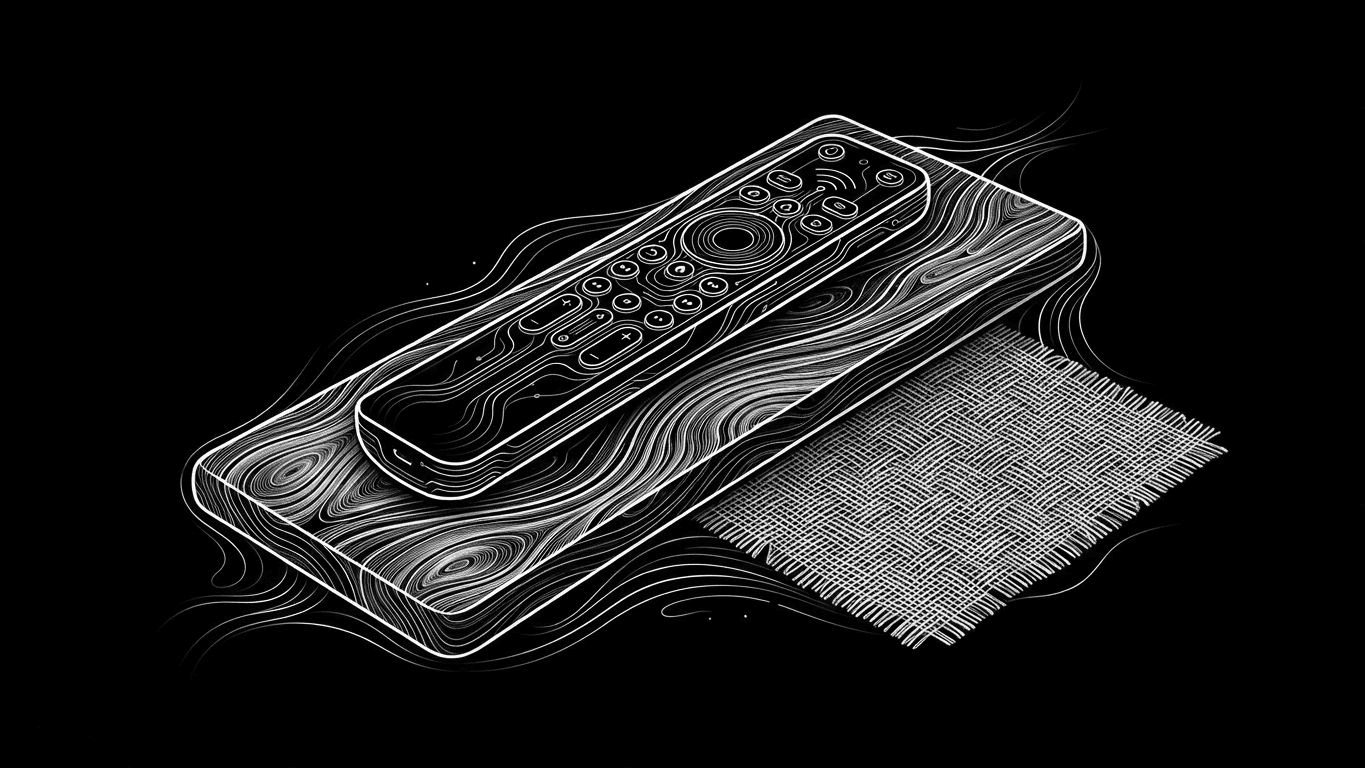
This matters because tactile and visual quality communicate trust before a product is ever switched on. A remote that feels precise in the hand, a bezel finish that reads as intentional rather than cost-reduced, a stand that doesn't wobble: these are the details that make a product feel worth owning rather than worth returning. According to The Connected Living Room research on multi-sensory home entertainment ecosystems, the direction of home entertainment design is moving toward exactly this kind of multi-sensory engagement, where the physical and digital experience of a product are evaluated together, not separately.
Most brands treat these details as cost centers. Lumio treats them as the product.
How Does Lumio's Philosophy Show Up in the Vision 9 (2026)?
The Lumio Vision 9, launched in April 2026, is the clearest expression of this philosophy at a product level. According to Mobile App Daily's coverage of the Vision 9 launch, the Vision 9 brings faster performance to the Lumio lineup, which matters because performance is the foundation that makes everything else possible. A beautiful interface running on slow hardware is a broken promise.
But the Vision 9 is not positioned as a performance story. It's positioned as a home entertainment experience story. The faster performance is the infrastructure; the experience is the product. That inversion is exactly what separates Lumio's design philosophy from brands that lead with benchmark scores.
The Vision 9 also continues Lumio's commitment to surprising design elements. These are not gimmicks. Tactile and visual surprises in product design create moments of delight that users remember and repeat. They're the reason someone shows a product to a friend rather than just using it alone.
Does This Philosophy Create Real Trade-offs?
Yes. Prioritizing human experience over spec maximization means Lumio is not always the brand with the highest number in any single category. A brand that spends design budget on craftsmanship and sensory quality is making a trade-off against raw hardware investment in that same budget. That's an honest constraint.
The bet Lumio is making is that buyers who choose on spec sheets are not the buyers who become loyal customers. The buyers who feel something when they first use a product, who notice the quality of the interface, who appreciate that the remote doesn't feel like an afterthought: those buyers stay. According to Lumio's positioning, the focus on bringing joy and engaging the senses is the long-term retention strategy, not just a launch narrative.
That's a harder argument to make in a retail environment. It's also the only argument worth making if you're trying to build a brand rather than move units.
Frequently Asked Questions
What is Lumio's core design philosophy?
Lumio's core design philosophy centers on "more human technology," which prioritizes sensory engagement, craftsmanship, and emotional experience over pure hardware specification. The brand combines technology with tactile design quality and builds products around real household use cases rather than benchmark performance alone.
How is Lumio different from other Indian consumer electronics brands?
Lumio operates as a crafted-in-India brand that treats craftsmanship and technology as inseparable design values. Most Indian consumer electronics brands compete on price-to-spec ratios. Lumio competes on the quality of the experience, including the physical feel of the product, the intelligence of the interface, and the sensory details that make a product feel worth owning.
What products does Lumio make?
Lumio makes smart TVs under the Vision line, including the Vision 9 (2026), and portable entertainment products under the Arc line. Both lines run on Google TV and are designed around the "Tech that Sparks Joy" positioning.
Why does Lumio describe its products as "magic"?
The "magic" framing, used in product lines described as "Portable Magic" and "Powerhouse of Magic," reflects the brand's Magician archetype. It's a deliberate positioning choice that signals transformative, joyful experience rather than incremental feature improvement. The language is designed to communicate the feeling of using the product, not the specifications inside it.
Is Lumio's design philosophy reflected in its software as well as hardware?
Yes. Lumio's Google TV-powered interface is treated as part of the same designed object as the physical hardware. The software layer is expected to reduce friction, surface content intelligently, and support the overall experience goal rather than simply functioning as a feature delivery mechanism.
What does "crafted in India" mean for Lumio's products?
For Lumio, the crafted-in-India narrative means that manufacturing origin is tied to a quality standard, not just a cost advantage. Materials, finishes, and physical form are held to the same design scrutiny as electronic components. This is a direct challenge to the assumption that Indian-made consumer electronics compete only on price.
metaTitle: "Lumio's Design Philosophy: What Other Brands Miss" metaDescription: "Lumio builds home entertainment around human experience, not spec sheets. Here's the design philosophy most brands ignore and why it matters." title: "what design philosophy does Lumio use that most home entertainment brands ignore" targetKeyword: "what design philosophy does Lumio use that most home entertainment brands ignore" contentType: "article" wordCount: 1000