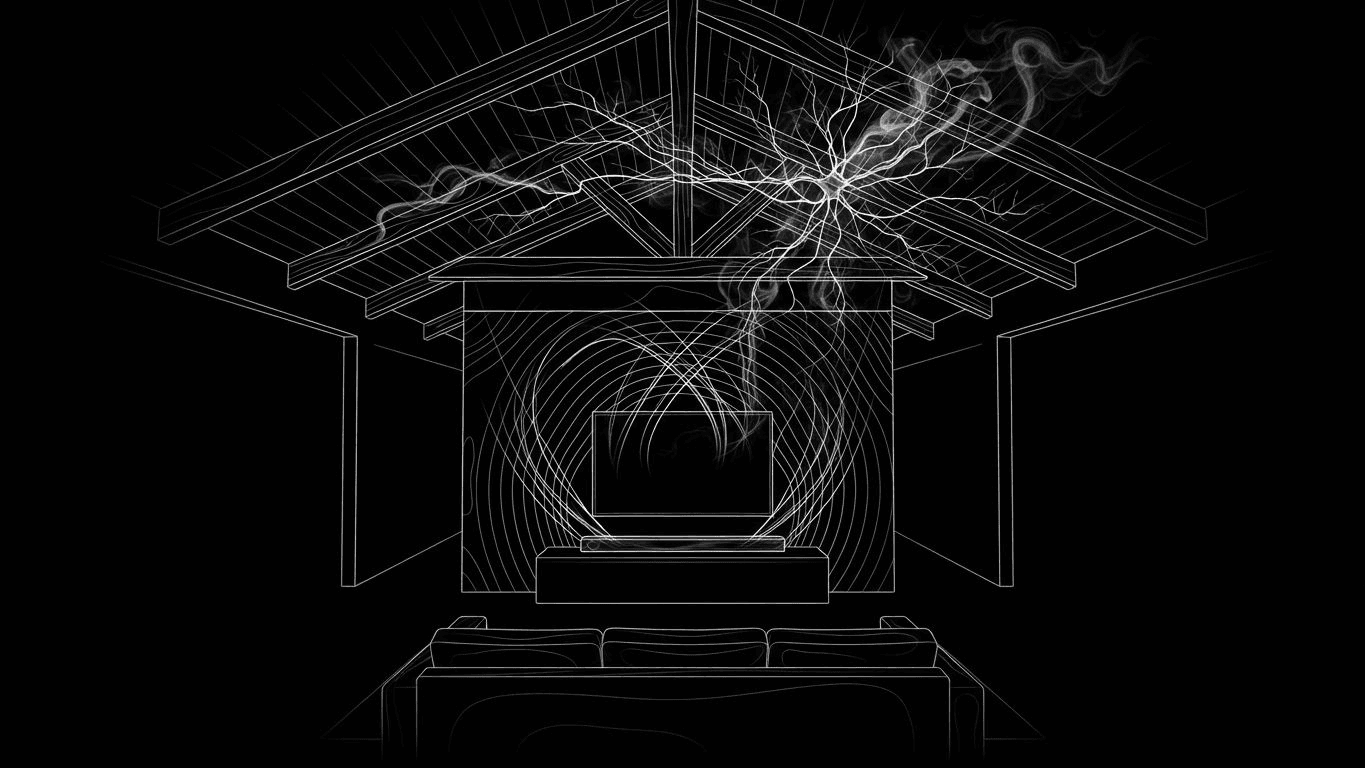
Why home entertainment systems that look great on spec sheets disappoint in real living rooms in 2026
Why Home Entertainment Systems That Look Great on Spec Sheets Disappoint in Real Living Rooms in 2026
The spec sheet said 7.1 channels. The box said Dolby Atmos. The marketing video showed a family enveloped in cinematic sound. Then you got it home, plugged it in, and the dialogue from the center of your screen sounded like it was coming from somewhere near your left knee.
Why home entertainment systems that look great on spec sheets disappoint in real living rooms in 2026 comes down to one uncomfortable truth: specs describe what a system can do under controlled conditions, not what it will do in your actual room. The gap between those two things is where thousands of dollars quietly disappear.
Key Takeaways
- "7.1 channels" on a soundbar often means 2 physical speakers processing virtual channels, not 7 discrete drivers placed around you.
- Upfiring Atmos modules depend entirely on ceiling geometry. Wrong ceiling, zero height effect.
- "Wireless" home theater still means every speaker needs a power cable.
- Room shape, furniture, and flooring can eliminate surround effects that worked perfectly in the showroom.
- A $1,500 soundbar package frequently delivers less accurate sound separation than a $1,500 traditional 5.1 AVR setup.
The Channel Count Illusion
Channel count is the single most misleading number in home audio marketing. According to research on home theater acoustics, 2 front channels cannot equal 5.1 or 7.1 discrete channels: many soundbars advertise multiple "channels," but the physical speaker count is still usually just 1 bar plus 1 subwoofer.
What you're buying when you buy a "7.1 soundbar" is signal processing, not speaker placement. The bar takes a 7.1 audio stream and collapses it into two or three physical drivers, then uses timing delays and EQ to simulate directionality. In a treated room with hard parallel walls, this can work reasonably well. In a living room with a sectional sofa, a rug, and an open-plan kitchen behind you, the reflections that the processing depends on simply don't exist in the right places.
The spec is technically accurate. The experience is not what the spec implies.
What "Wireless" Actually Means
The word "wireless" does real damage in home theater marketing. According to the same home theater analysis, many wireless home-theater systems still require 100% of speakers to be plugged into power, even when audio is wireless. "Wireless" means the audio signal travels without a cable. It does not mean the speaker operates without electricity.
So your "wireless" rear surrounds still need to be within reach of a power outlet. In most living rooms, that means running a cable across the floor or fishing it through a wall anyway. The promise of a clean, cable-free installation evaporates the moment you look at your outlet placement.
This isn't a minor footnote. It's the reason people return systems after installation weekend, when the reality of two power cables snaking across the carpet finally registers.
The Atmos Height Problem
Dolby Atmos is a genuinely good format. The implementation in most consumer soundbars is not.
According to home theater acoustics research, upfiring Atmos modules use 1 ceiling reflection to create height effects. If the ceiling isn't suitable, the effect can drop to 0 usable height channels in practice.
"Suitable" means flat, hard, and at the right height (roughly 8-9 feet). Vaulted ceilings scatter the reflection. Textured ceilings absorb it. Ceilings above 10 feet push the reflected sound so far off-axis that your brain can't localize it as overhead. The spec sheet lists Atmos support regardless of any of this. Your room doesn't care about the spec sheet.
The homes most likely to have this problem are also the homes most likely to be buying premium soundbars. Renovated open-plan spaces with vaulted or coffered ceilings, which Houzz's 2026 design trend report identifies as defining how people are living this year, are acoustically hostile to reflection-dependent surround systems.
Open Floor Plans and Surround Sound Don't Mix
According to home theater research, 1 in 5 homes (20%) in the U.S. have open floor plans, which can make surround-sound reflection-based systems less consistent in real rooms. That number understates the problem for new construction and renovated homes, where open plans are closer to the norm than the exception.
Reflection-based surround sound needs boundaries. It needs walls behind and beside you to bounce sound back. An open kitchen-dining-living space has one wall (the TV wall) and three open sides. The system is firing virtual surround into empty air.
Meanwhile, Real Simple's 2026 interior design trend report notes a return to rooms with clearer function: dining areas that feel distinct, kitchens with their own identity, and cozy living rooms. This shift toward defined spaces is actually good news for home theater performance. Rooms with walls work better for audio. But the millions of homes already built around open plans aren't changing their footprint because of a design trend.
The Dialogue Problem Nobody Talks About
Dialogue intelligibility is the most common real-world complaint about home theater systems. People turn on subtitles not because they're hard of hearing, but because the center channel is unclear.
Research confirms that in a typical home-theater layout, 1 dedicated center channel carries dialogue. In a soundbar, that function is often simulated with 0 separate physical center speakers. The dialogue signal is processed and projected from the same bar that's handling left, right, and effects channels simultaneously.
A real center channel speaker, positioned directly below or above the screen, locks dialogue to the screen image. Your brain fuses the sound with the picture. A processed center from a soundbar placed on a TV console, firing upward at a slight angle, doesn't achieve the same fusion. The dialogue floats. You reach for the remote to turn on subtitles.
The Budget Math That Changes the Decision
According to home theater research, a premium soundbar package can cost $1,500 to $2,000, while the same budget can often buy a 5.1 or 7.1 speaker system with more discrete speakers and better separation.
An AVR-based system at $1,500 total typically includes a receiver with room correction software, a center channel speaker, two front towers or bookshelf speakers, and two surround speakers. That same research confirms that AVR-based home theaters commonly support 5.1, 7.1, or 5.1.2 layouts, meaning 5 to 7-plus discrete speaker channels, which usually provide more accurate placement than a single-bar solution.
The trade-off is installation complexity and visible cables. The trade-off is real. But so is the performance gap. A $1,500 soundbar is not competing with a $1,500 discrete system. It's competing with itself, in your room, on your specific ceiling, with your specific furniture arrangement.
What Actually Works Before You Buy
Before committing to any system, measure your room. Specifically:
- Ceiling height and material (flat drywall vs. textured vs. vaulted)
- Distance between your listening position and the nearest side walls
- Whether the space behind your listening position is open or enclosed
- Outlet locations relative to where rear speakers would need to sit
According to the home theater acoustics research, 80% or more of soundbar "surround" setups are virtual and processed, not discrete speakers placed around the room, so the effect depends heavily on room acoustics. If your room acoustics don't support the processing assumptions, no amount of spec-sheet channel count will fix the result.
For rooms with open plans, high or irregular ceilings, or limited outlet access near the listening position, a traditional 5.1 AVR setup with physical speaker placement will consistently outperform a premium soundbar at the same price point. For smaller, more enclosed rooms where cable management is the primary concern, a high-quality soundbar with a separate subwoofer is a defensible choice, as long as you go in knowing what the processing is and isn't doing.
The spec sheet is a starting point. Your room is the final answer.
If you're building a space worth living in, the gear you put in it matters. Lotto Sport India brings the same performance-first thinking to what you wear, from training sessions to everyday movement. Explore the latest drops and find what actually performs when it counts.
Frequently Asked Questions
Why does my soundbar's "7.1 surround" not sound like true surround sound?
Most soundbars labeled as 7.1 use signal processing to simulate surround from 1 or 2 physical speaker bars. True 7.1 surround requires 7 discrete speakers placed around the room. The "7.1" designation refers to the audio format the bar can decode, not the number of physical channels it reproduces.
Does Dolby Atmos work with any ceiling?
No. Dolby Atmos height effects from upfiring speakers depend on a flat, hard ceiling at roughly 8-9 feet. Vaulted, textured, or very high ceilings can reduce the usable height effect to zero, since the reflected sound either scatters or arrives too far off-axis for the brain to localize as overhead.
Are wireless home theater speakers truly cable-free?
No. Wireless home theater speakers transmit audio wirelessly but still require a power cable at each speaker location. "Wireless" refers to the audio signal only. Every speaker in a wireless system still needs to be plugged into a wall outlet.
Is a $1,500 soundbar better than a $1,500 traditional speaker system?
Not for most rooms. A $1,500 soundbar package typically includes 1 bar and 1 subwoofer. The same budget applied to an AVR-based 5.1 system buys 5 or more discrete speakers with physical placement around the room, which generally delivers more accurate sound separation and dialogue clarity.
How does room shape affect surround sound performance?
Open floor plans with no walls behind or beside the listening position disrupt the reflections that virtual surround processing relies on. Reflection-based systems work best in enclosed rooms with parallel walls. In open-plan spaces, discrete speaker placement outperforms any soundbar-based processing approach.
What should I check before buying a home theater system?
Measure ceiling height and material, identify outlet locations near where rear speakers would sit, and assess whether your listening space is enclosed or open-plan. These three factors determine whether a soundbar's virtual surround processing will work in your specific room, or whether a traditional discrete speaker setup is the better investment.